

Bently Nevada Vibration Monitoring Systems: A Buyer’s Guide for the UK & Ireland

Bently Nevada Vibration Monitoring Systems: A Buyer’s Guide for the UK & Ireland
Why vibration monitoring pays for itself

Unplanned downtime is costly, and vibration monitoring exists to catch problems early. Don Bently was the first to manufacture a commercially successful eddy-current proximity probe, which lets you observe a rotating shaft directly, and Bently Nevada systems are now used to monitor rotating equipment in oil and gas, hydroelectric, wind, power generation, pulp and paper, mining, and water and wastewater. Detecting wear, misalignment or imbalance early lets you plan the repair instead of reacting to a failure. We covered the business case in our post on predictive asset protection with Bently Nevada.

Find your starting point

Match your machine type to a sensible first configuration. Every site is different, so treat this as a starting point and send us your details to confirm.

Your machine Where to start Key parts
Gas or steam turbine 3500 rack with 3500/40M or 42M proximity monitors, 3500/45 thrust position, 3500/50M tachometer, 3500/25 Keyphasor® module, 3500/32M relays and 3500/22M data interface. 3300 XL 8/11 mm probes, 3500/60 temperature, 3500/94M display
Reciprocating compressor Add 3500/70M impulse velocity, 3500/72M rod position and 3500/77M cylinder pressure monitors to catch crosshead, rod drop and pressure issues early. 3500/70M, 3500/72M, 3500/77M
Pump, fan or motor 2300 Series monitor (seismic or proximity input, relays, optional 4–20 mA) or the standalone 1900/65A. 2300 Series, 1900/65A, 330500 Velomitor
Simple PLC / DCS loop 990 vibration transmitter (with 3300 NSv probes) or 991 thrust transmitter giving a proportional 4–20 mA signal. 990, 991, 3300 XL NSv
High temperature or outdoor 330525 Velomitor XA for wet or outdoor use, or 330750 / 330752, which keeps the electronics away from heat. 330525 XA, 330750/752, PROXPAC XL

The four building blocks of a Bently Nevada system

1

Sensors

Proximity probes (3300 XL 8 mm, 11 mm, 25 mm, NSv), Velomitor® velocity sensors and accelerometers. They are your eyes on the machine.

1

Sensors

Proximity probes (3300 XL 8 mm, 11 mm, 25 mm, NSv), Velomitor® velocity sensors and accelerometers. They are your eyes on the machine.

Connection with the Scarborough Gas Field

The Pluto Train 2 Project is associated with the offshore Scarborough gas field, located approximately 375 kilometres off the coast of Western Australia.

The development involves connecting offshore gas resources with onshore LNG processing infrastructure.

The overall gas supply chain includes:

  1. Offshore gas production
  2. Transportation of natural gas to the LNG facility
  3. Gas processing and treatment
  4. LNG production
  5. Storage and export

The connection between offshore gas production and onshore LNG processing demonstrates the complexity of modern LNG developments, where multiple systems must operate together safely and efficiently.

LNG Production Capacity

The Pluto Train 2 Project is designed to provide approximately:

5 million tonnes per annum (Mtpa) of LNG processing capacity

This additional capacity expands the LNG production capability of the existing Pluto LNG facility.

The project also includes domestic gas infrastructure designed to support supply to the Western Australian domestic gas market.

Major Components of the Pluto Train 2 Development

LNG Processing Train

The LNG processing train is the central processing unit responsible for converting natural gas into LNG.

The process generally includes:

Gas Treatment

Raw natural gas contains components that must be removed before liquefaction.

Typical gas treatment processes remove:

  • Water
  • Carbon dioxide
  • Other unwanted compounds

Gas treatment improves LNG quality and protects downstream equipment.

Liquefaction Process

After treatment, natural gas is cooled to extremely low temperatures until it changes from a gas into a liquid.

Liquefied natural gas occupies significantly less volume than natural gas in gaseous form, allowing efficient transportation by LNG carriers.

LNG Storage and Export

After production, LNG is stored in specialised storage tanks before being transferred to export vessels.

LNG export facilities require reliable operation of:

  • Storage systems
  • Loading systems
  • Supporting utilities
  • Safety systems

Construction and Development Progress

The Pluto Train 2 Project has progressed through several major construction phases.

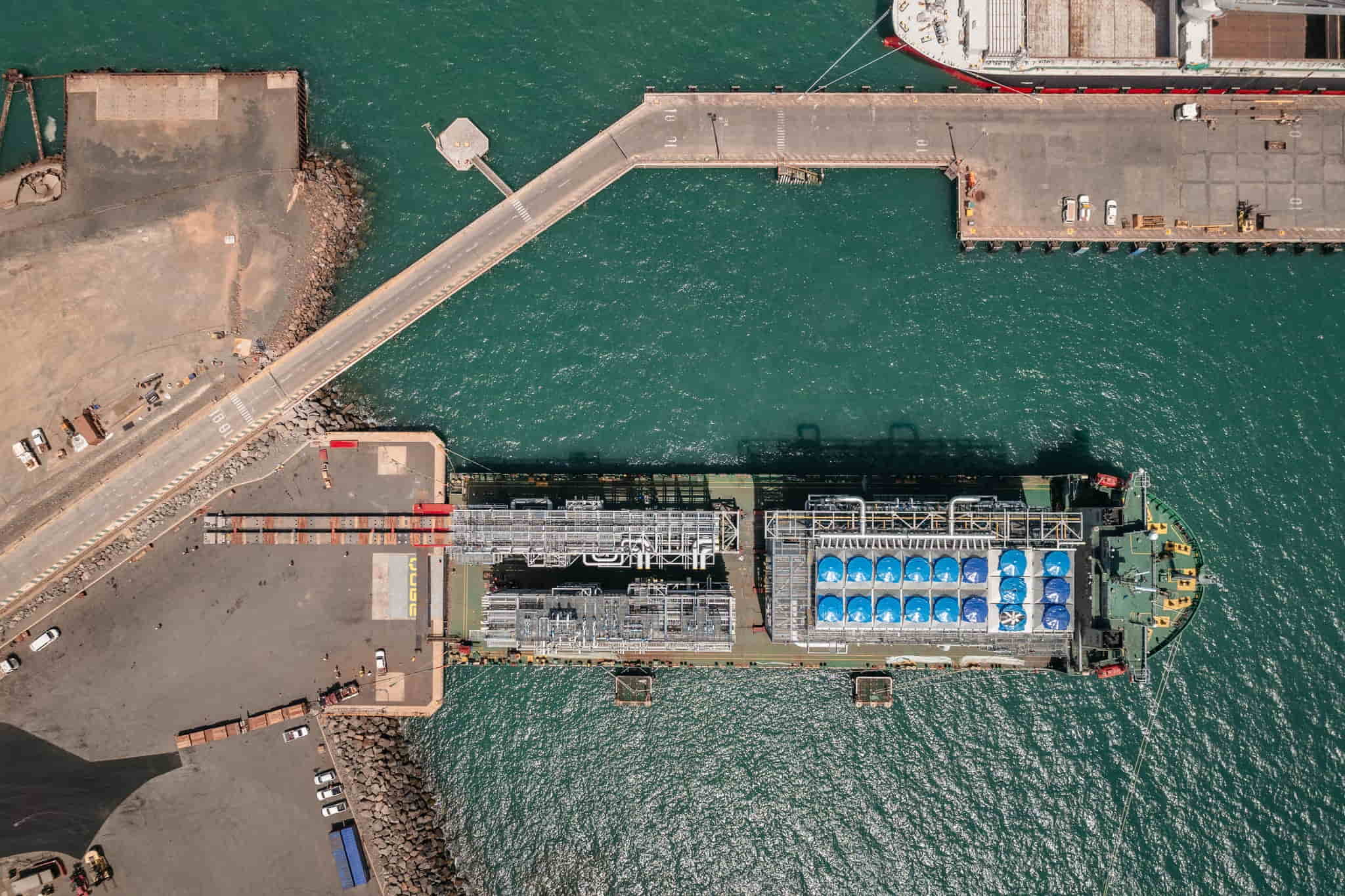
Large LNG developments often use modular construction methods, where major plant sections are fabricated separately before being transported and assembled at the final project location.

Public project updates have reported the delivery of major LNG modules to the project site as part of the construction programme.

The project is targeting LNG production during 2026.

Engineering Considerations in Large LNG Projects

Large LNG facilities require coordination between multiple engineering disciplines.

Key engineering areas include:

Process Engineering

Process engineers design systems for:

  • Gas treatment
  • Separation
  • Liquefaction
  • Refrigeration
  • LNG handling

Mechanical Engineering

Mechanical systems commonly include:

  • Compressors
  • Pumps
  • Heat exchangers
  • Pressure vessels
  • Rotating equipment

Reliability of mechanical equipment is essential because LNG facilities operate continuously for extended periods

Electrical Engineering

Electrical infrastructure supports:

  • Motors
  • Control systems
  • Plant utilities
  • Power distribution

Role of Instrumentation Systems in LNG Operations

Instrumentation systems provide measurement and monitoring of important operating parameters.

Typical measurements in LNG facilities include:

  • Pressure
  • Temperature
  • Flow
  • Level
  • Vibration
  • Equipment condition

These measurements allow operators and control systems to maintain safe and efficient plant operation.

Pressure Measurement

Pressure measurement is widely used in LNG facilities.

Typical applications include monitoring:

  • Gas processing systems
  • Pipelines
  • Compressors
  • Process vessels
  • Storage systems

Accurate pressure measurement helps maintain process stability and supports equipment protection.

Temperature Measurement

Temperature control is essential during LNG processing because liquefaction requires extremely low temperatures.

Temperature measurement is commonly used in:

  • Heat exchangers
  • Refrigeration systems
  • Gas treatment units
  • LNG storage systems

Flow Measurement

Flow measurement supports monitoring of fluid movement throughout industrial processes.

In LNG facilities, flow measurement may be used for:

  • Natural gas streams
  • Utility systems
  • Process fluids
  • Product measurement

Level Measurement

Level measurement technologies help monitor liquid levels within:

  • Storage tanks
  • Process vessels
  • Separation equipment

Reliable level monitoring supports safe operation and prevents process interruptions.

Condition Monitoring of Rotating Equipment

LNG facilities depend on rotating equipment such as compressors and pumps.

Condition monitoring is commonly used to assess equipment health through parameters such as:

  • Vibration
  • Temperature
  • Operating performance

Early detection of equipment issues can support maintenance planning and improve reliability.

Safety Systems in LNG Facilities

Safety is a critical requirement in LNG operations.

Industrial LNG facilities commonly use multiple layers of protection, including:

  • Process monitoring
  • Emergency shutdown systems
  • Safety instrumented functions
  • Hazard detection systems

The exact safety system configuration varies depending on facility design and project requirements.

Common Instrumentation Technologies Used in LNG Facilities

Large LNG facilities require reliable measurement and control solutions from specialised industrial instrumentation manufacturers. While specific supplier selections for Pluto Train 2 have not been publicly disclosed, LNG projects worldwide commonly use technologies from established instrumentation providers, including:

Pressure and Differential Pressure Measurement

Common industrial suppliers include:

Typical applications:

  • Gas processing units
  • Compressors
  • Pipelines
  • Process vessels

Flow Measurement

LNG facilities commonly use flow measurement technologies from manufacturers such as:

Typical applications:

  • Natural gas flow measurement
  • Utility monitoring
  • Process optimisation

Condition Monitoring and Machinery Protection

Large LNG plants rely on rotating equipment such as compressors and turbines. Condition monitoring solutions are commonly provided by companies such as:

Applications include:

  • Vibration monitoring
  • Bearing condition monitoring
  • Predictive maintenance

Temperature Measurement

Industrial temperature measurement solutions are commonly supplied by manufacturers such as:

  • WIKA
  • Endress+Hauser
  • Yokogawa Electric Corporation

Applications include:

  • LNG processing
  • Refrigeration systems
  • Heat exchangers

Control and Automation Systems

Large LNG facilities typically use distributed control and safety systems from major automation suppliers, including:

Applications include:

  • Process control
  • Plant monitoring
  • Safety functions

Note: The instrumentation brands listed above represent commonly used technologies in LNG and process industries. Specific instrumentation suppliers and equipment selections for the Pluto Train 2 Project have not been publicly disclosed. Inclusion of these manufacturers does not indicate confirmed supply to Pluto Train 2.

Environmental and Regulatory Considerations

Large LNG developments require environmental assessment and regulatory approvals before construction and operation.

Environmental considerations for LNG projects generally include:

  • Marine ecosystem management
  • Emissions management
  • Construction impact monitoring
  • Operational environmental controls

Project-specific environmental requirements depend on applicable government approvals and operating conditions.

Economic Significance

The Pluto Train 2 Project represents a significant investment in LNG infrastructure.

Large energy projects can contribute through:

  • Engineering employment
  • Construction activities
  • Local supply chain participation
  • LNG export capability
  • Domestic energy supply support

Conclusion

The Pluto Train 2 Project represents a significant LNG infrastructure expansion connecting offshore natural gas resources with additional LNG processing capability in Western Australia.

The project highlights the complexity of modern LNG developments, where process engineering, automation, instrumentation, mechanical systems, and safety technologies work together to support reliable energy production.

For industrial instrumentation and automation professionals, Pluto Train 2 provides an example of how large-scale LNG facilities depend on accurate measurement, monitoring, and control throughout their operational lifecycle.